For years, Michelle Reynolds, who resides in Truckee, lived under the constant threat of physical violence from her husband. When she made the decision to leave him, the threat only grew.
“He became more controlling as he recognized and had a fear of me leaving. The clamp started getting tighter and tighter,” she said.
Reynolds bravely spoke to Moonshine Ink in early October to share her experience. The harrowing story comes with a warning to the reader — it’s difficult to grapple with and may be triggering. Paul Bancroft, executive director of Sierra Community House, also sat in on the conversation. Thirteen years ago, he and the organization supported Reynolds as she navigated anybody’s worst nightmare.

Her Story
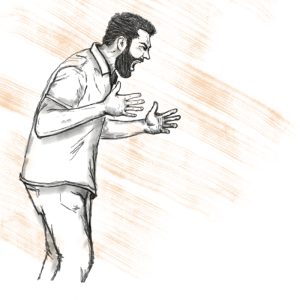
Reynold’s husband had never physically abused her during their relationship, but the emotional abuse and underlying threat of physical violence were relentless. “It wasn’t physical violence. It was the threat, the gun violence, the sort of threatening which is far worse than getting [hit],” Reynolds said.
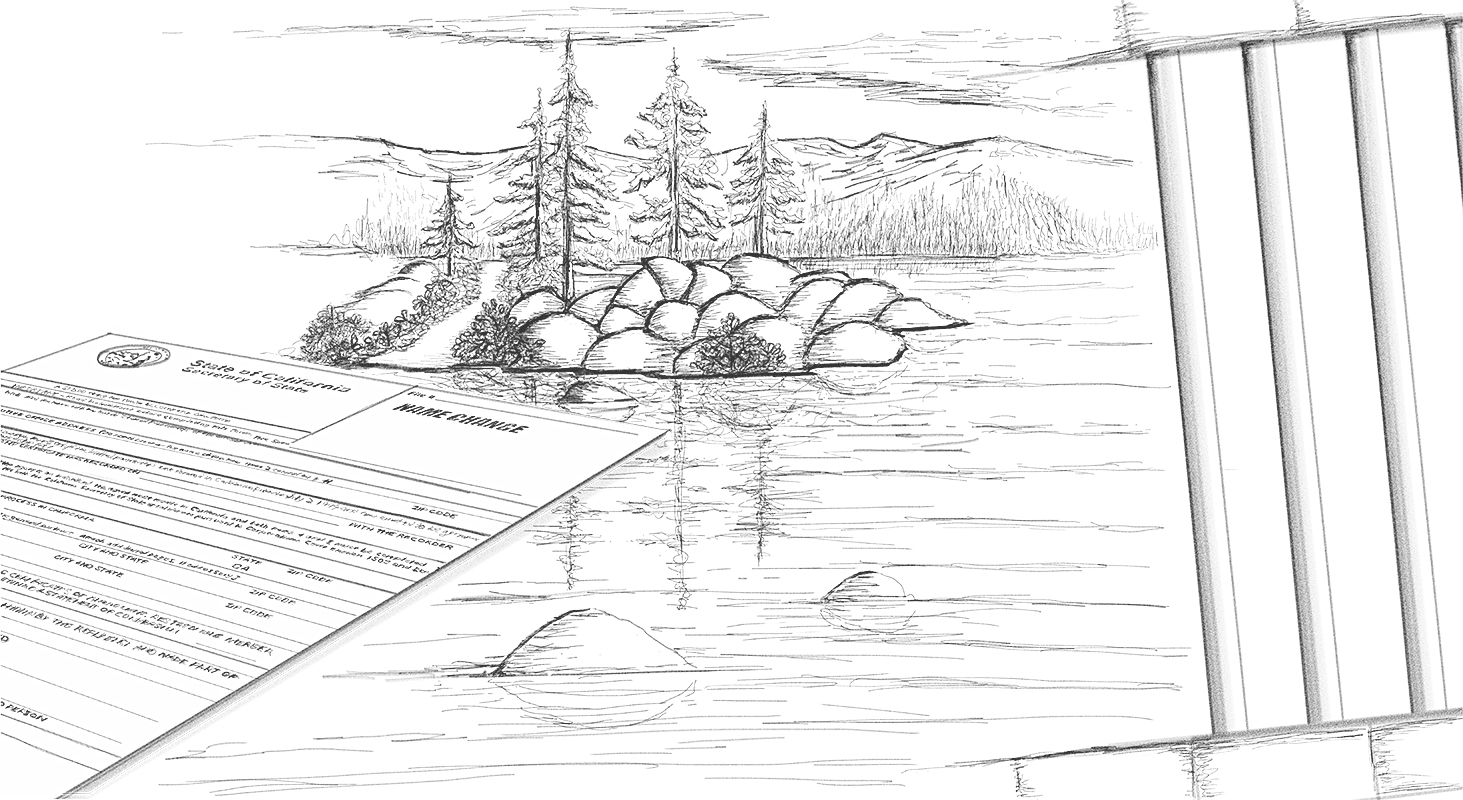
When Reynolds divorced her husband, she hid with her kids, ages 12 and 13, to protect her family. “I had been running from my ex-husband for many years, and he had been threatening the lives of my family, myself, and friends,” she said. She made her way to the Tahoe area, hoping to find an escape. “I moved up here and changed our names … to keep [my kids] protected.”
Four years later, Reynold’s worst fears were realized when her ex-husband tracked down the family. He then did the unimaginable; he shot their son.
“He located my son and killed him. And I was devastated. My family was devastated,” she said. The trauma of losing a child, and in such a violent way, is hard to imagine. As she told the story to Moonshine, more than a decade had elapsed since the tragedy, yet many times Michelle struggled to talk through the tears running down her face.
After her son’s death, she found support through loved ones, with one friend introducing her to Tahoe SAFE Alliance, which is today known as Sierra Community House. With their help, Reynolds found the strength to continue.
“I got so much help — advocates and therapists helped me get through that,” she said. Now she gives back to others experiencing domestic violence. “Volunteering has saved me. I first started volunteering at the safe house and helping other women with domestic violence and letting people know that these threats can be very serious,” she said.
While her ex-husband is now in prison, he continues to apply for parole, and Reynolds writes letters to the parole board, advocating for denial. She explained that each time this happens, she mentally revisits her tragic experience. Bancroft reminded her that Sierra Community House can write the letters for her; this is one of several services that the organization provides.
The Many Faces of Domestic Violence
You may not realize it, but there is a very strong chance you know someone who has experienced domestic violence. According to the National Network to End Domestic Violence, whose recent awareness campaign was #Every1KnowsSome1, one third of women, one fourth of men, and nearly half of LGBTQ+ people will experience domestic violence in their lifetime.
The issue of domestic violence is multifaceted — every experience is as different as the people involved, and violence can range from quiet control and manipulation to full-blown physical trauma that can end in tragedy.
Reynolds’ story, so extreme in its violence, is a reminder of how dangerous domestic violence can be, even when it’s not physical. She stressed how easily emotional and psychological abuse is dismissed.
“People think because a woman or person that is being threatened becomes so emotional that they’re exaggerating, that it’s blown out of proportion, and it oftentimes isn’t,” she said.
Bancroft explained, and Reynolds agreed, that domestic abuse frequently begins with the abuser asserting control over the victim’s finances and relationships. “The perpetrator slowly manipulates the friendships and the family. So, the victim becomes isolated,” Reynolds said.
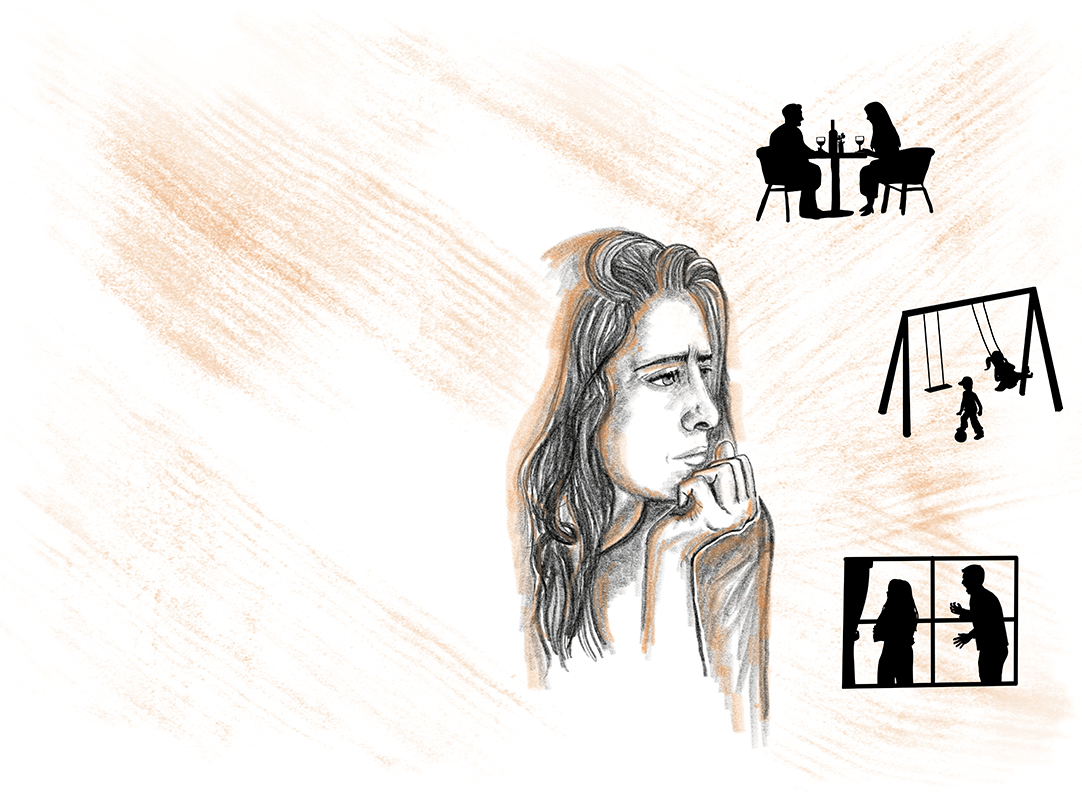
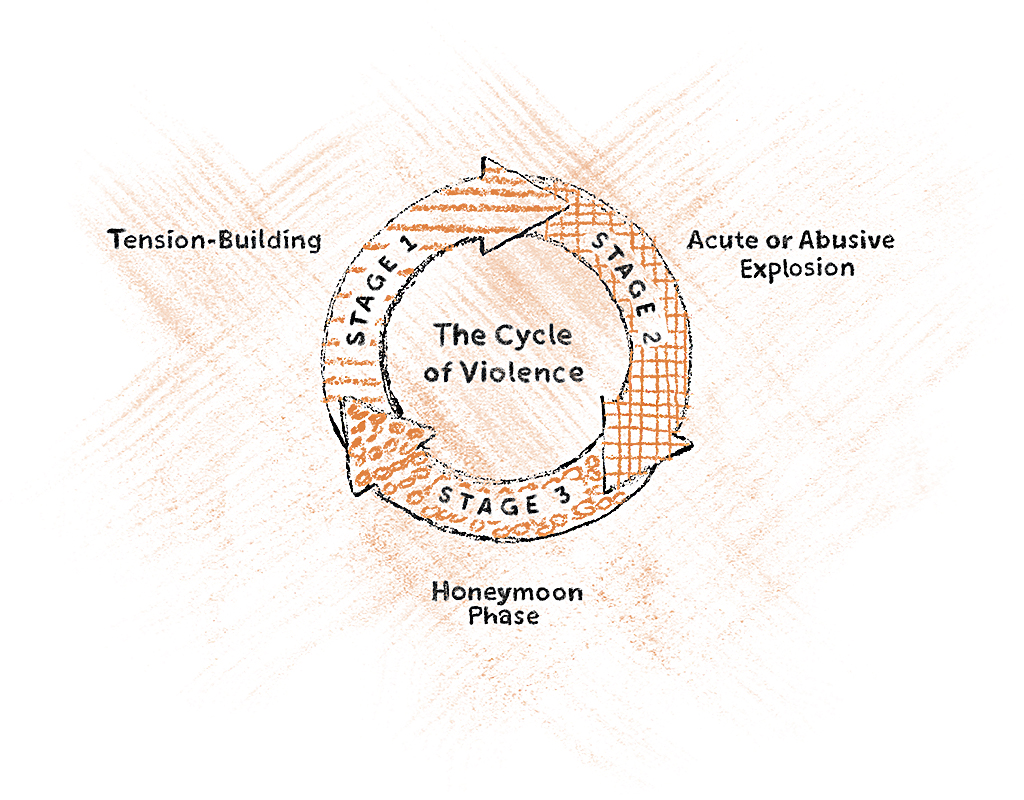
One of the most difficult aspects of domestic violence is the cycle it perpetuates — a pattern that can be hard to escape. As Bancroft described, this cycle of violence typically involves tension building, an explosive incident, and a honeymoon phase where the abuser shows remorse and makes promises to change. “There might be flowers and a nice dinner the next day, and the victim starts to believe it’s going to be okay,” Bancroft said. Over time, however, the honeymoon phase shortens, and the violence escalates.
The risk of tragedy is real when there is violence. When an abusive man has access to a firearm, there is a 400% increased risk of him killing his female intimate partner, according to Risk Factors for Femicide in Abusive Relationships: Results From a Multisite Case Control Study, published in the American Journal of Public Health in 2011.
Bancroft often hears the question, “Why don’t the victims just leave?” Unfortunately, it’s not that easy. “Financial abuse is, if not number one, then the top one or two forms of abuse that prevents somebody from leaving,” Bancroft said. “And on average, it takes someone seven attempts to get out of an abusive relationship. We work with folks who have been married 30, 40 years who are at their sixth, seventh, 10th attempt.”
Rural communities present their own set of challenges for those seeking escape, from the fact that it’s hard to “get away” in the fishbowl of small-town living to a lack of resources.
“One thing that’s missing [in our community] is a SANE nurse,” Bancroft said. SANE is an acronym for sexual assault nurse examiner, someone who administers forensic exams in the event of a sexual assault. “They collect bodily evidence … that can be used in legal proceedings and in court and with law enforcement, and also for the health and overall well-being of the victim.”
Another challenge our community faces is the overlap of counties and jurisdictions. “For a lot of services, you have to go over the hill to Reno, Carson, Grass Valley, or Nevada City. We try to fill that gap and make sure everything that is needed is available to folks here in Truckee and in the Basin,” Bancroft said.
Filling the Gap
Sierra Community House is composed of four community organizations that united in 2019 to share resources and provide seamless support to local individuals and families — the Family Resource Center of Truckee, North Tahoe Family Resource Center, Tahoe SAFE Alliance, and Project MANA. For those experiencing domestic violence, the organization offers an extensive range of services and wraparound support.
As financial abuse is one of the most significant barriers to leaving an abusive relationship, Sierra Community House offers free legal services, which cover everything from filing restraining orders to navigating divorce and custody proceedings. “We do temporary restraining orders and then permanent restraining orders. We’ll provide all the support that somebody needs to get that process through the court system, which can be really tricky,” Bancroft said.
A 24-hours-a-day, 7-days-a-week community helpline connects victims with local advocates who guide them through their options and connect them to further services, whether it’s access to a safe shelter, financial assistance, or things like fixing a car, buying transportation tickets, or covering the cost of moving schools for children.
The organization also provides counseling and support groups — complete with childcare — where survivors can process their trauma with professional help and connect with others who have faced similar experiences. This peer support is often just as valuable as professional guidance.
“Our advocates’ job is to believe people and to listen and to bear witness and to say, ‘I’m hearing your story, and I believe what you’re telling me, and it is real, and let’s work through it,’” Bancroft said.
In cases of sexual assault, Sierra Community House provides specialized services, including transportation to and from forensic exams conducted by SANE nurses in Reno. Advocates accompany survivors during these exams, providing emotional support and explaining each step of the process. Bancroft hopes that someday these services will be available locally.
Bancroft commented that the organization provides all the support they possibly can. “We work with people who come to us literally with only the clothes on their backs, often with their kids in tow, and not a penny to their names. A lack of money doesn’t need to be a barrier to leaving; that’s what our resources are for,” he said.

The Power of Support
Reynolds urges anyone experiencing domestic violence to reach out for help from friends, family, and organizations like Sierra Community House. For her, it was a lifeline. “I was so torn down. He’d tear me down here, and I’d pop up over there with support,” she said.
Today, Reynolds continues to work through her pain, finding meaning in facilitating support groups for other survivors and helping victims use art to express their pain and begin the process of healing. “I think volunteering and helping other people has helped me more than anything imaginable,” she said. “Just getting out of my own head and helping someone that’s struggling through the same struggles that I went through.”
Her daughter is on her own healing journey as well, attending college where she is on the honor roll. “It’s been a long haul for her,” Reynolds said. “I have seen some awesome healing that makes me happy. Everyone heals in their own time.”
If you’re experiencing domestic violence, or suspect that a loved one is, Sierra Community House offers confidential support every day of the week, any hour of the day. Call their 24-hour community helpline at (800) 736-1060 or email help@sierracommunityhouse.org. Learn more at sierracommunityhouse.org.